
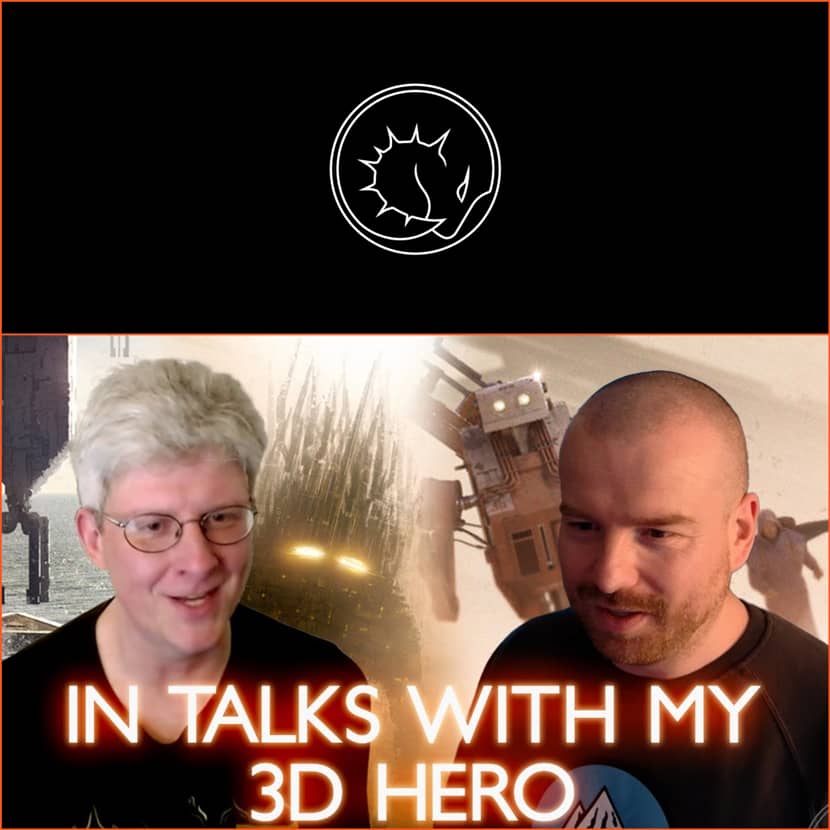
Industry veteran Neil Blevins joins the Renderram's channel for a for an open and thoughtful discussion about the past, present, and future of 3D art. Neil, who has worked at major studios like Blur and Pixar for almost thirty years, shares his journey from early pixel art and 3ds Max scripting. He also offers strong, nuanced opinions on software subscriptions, the rise of Blender, AI ethics, education, and the value of human connection in creative work.
This is a an interview on what it really means to be a 3D artist in a field that is evolving quickly, not just a talk about tools.
From Pixel Art to Professional 3D.
Neil Blevins’ relationship with digital art began long before modern pipelines existed. Beginning with pixel-by-pixel artwork in the early 1990s, he developed both a strong artistic sensibility and a profound technical understanding of computers. He started working professionally in the business in 1999, which signaled the start of a lengthy career hat would see him work across film, games, and personal art projects.
His early personal creations, such the well-known Hatred series, were as significant sources of inspiration for a whole generation of 3D artists. Neil simultaneously made a name for himself as a technical problem-solver and an artist, a combination that would characterize a large portion of his career.
Soulburn Scripts and the 3ds Max Era.
For many artists, Neil Blevins is synonymous with the legendary Soulburn Scripts for 3ds Max. These tools became essential components of innumerable production processes, frequently utilized on a daily basis by artists who had no idea who made them.
Neil reveals in the interview why he decided to stop Soulburn Scripts' active development, citing his strong antipathy to subscription-based software models as the main motivator. He makes it apparent that a return to active Max script creation is unlikely, even if he is still proud of the scripts and pleased that many users can still use them.
He stresses that this choice was a personal position on software ownership, artistic freedom, and long-term viability for artists rather than a rejection of the community.
Life at Pixar: Tools, Pipelines, and Reality.
Neil worked at Pixar for 16 years, helping to big-budget films including Wall-E, Up, and The Incredibles. Despite what many people think, his resignation from Pixar was unrelated to his creative discontent. Rather, it boiled down to something far more human: an increasingly intolerable commute.
Neil used a variety of tools there, including 3ds Max, Maya, RenderMan, Katana, Slim, Mudbox, and other internal Pixar systems. This experience reinforced his belief that software does not define an artist. What matters is understanding fundamentals, adapting to pipelines, and choosing the right tool for the task at hand.
He strongly rejects software tribalism, describing himself as “software agnostic” and encouraging artists to focus on artistic intent rather than brand loyalty.
Blender, Education, and the Next Generation.
The growth of Blender and its increasing influence in independent production and education constitute a significant portion of the conversation. Neil clarifies that his increased emphasis on Blender is motivated by necessity rather than hype: students overwhelmingly favor tools that are available, reasonably priced, and free from subscription pressure.
He points out that a lot of schools are moving away from Max and Maya because the business is evolving rather than because they are subpar. Blender is a perfect fit in the increasingly prevalent ecology of independent production, smaller teams, and community-driven innovation.
Rather than fully abandoning Max, Neil describes his approach as “hedging his bets”: continuing to use owned software while ensuring he can work freely in Blender if needed in the future.
A Thoughtful Take on AI in Art.
Neil's thoughtful position on artificial intelligence is among the most compelling aspects of the interview. He rejects extreme positions on both sides, instead advocating for ethical, limited, and purposeful use of AI.
Neil draws a clear distinction between:
- AI as a support tool (such as style transfer or workflow acceleration)
- AI as a replacement for human thinking and creativity
In addition to job dislocation, he worries about something far more basic: the decline of human connection, judgment, and curiosity. Creativity itself is under risk when artists accept computer production without question.
Neil believes that the key to the future is striking a balance between utilizing technology when it truly helps and maintaining the human voice, intention, and imperfection that make art meaningful.
Teaching, Community, and Giving Back.
These days, teaching and sharing knowledge are major aspects of Neil's career. He continues to give back to the community that shaped his career through live workshops, YouTube lessons, and written guidance on ArtOfSoulburn.
He believes strongly that teaching is not about gatekeeping knowledge, but about empowering others to develop their own voice. By explaining why something works, and not just how, artists gain tools they can adapt for a lifetime.
According to Neil, the foundation of the 3D world is still community. He attributes his continued enthusiasm for making art to cooperation, transparency, and a common interest, even in the face of industry downturns and evolving technologies.
🎥 Watch the full interview with Neil Blevins From ArtOfSoulburn below:
About RenderRam.
RenderRam is a YouTube channel focused on in-depth conversations, technical discussions, and honest insights from professionals across the 3D, VFX, and CG industries. RenderRam creates a space for meaningful dialogue about tools, workflows, and the evolving creative landscape, something beyond surface-level trends.
About Neil Blevins.
Neil Blevins is a veteran 3D artist, technical director, educator, and the creator of ArtOfSoulburn. With nearly 30 years of experience, he has worked at renowned studios including Blur Studio, Pixar Animation Studios, and Monolith Productions. Neil is widely respected for his Soulburn Scripts, his thoughtful tutorials, and his strong advocacy for ethical technology use, artistic fundamentals, and community-driven learning. Through ArtOfSoulburn, he continues to inspire and educate artists worldwide.